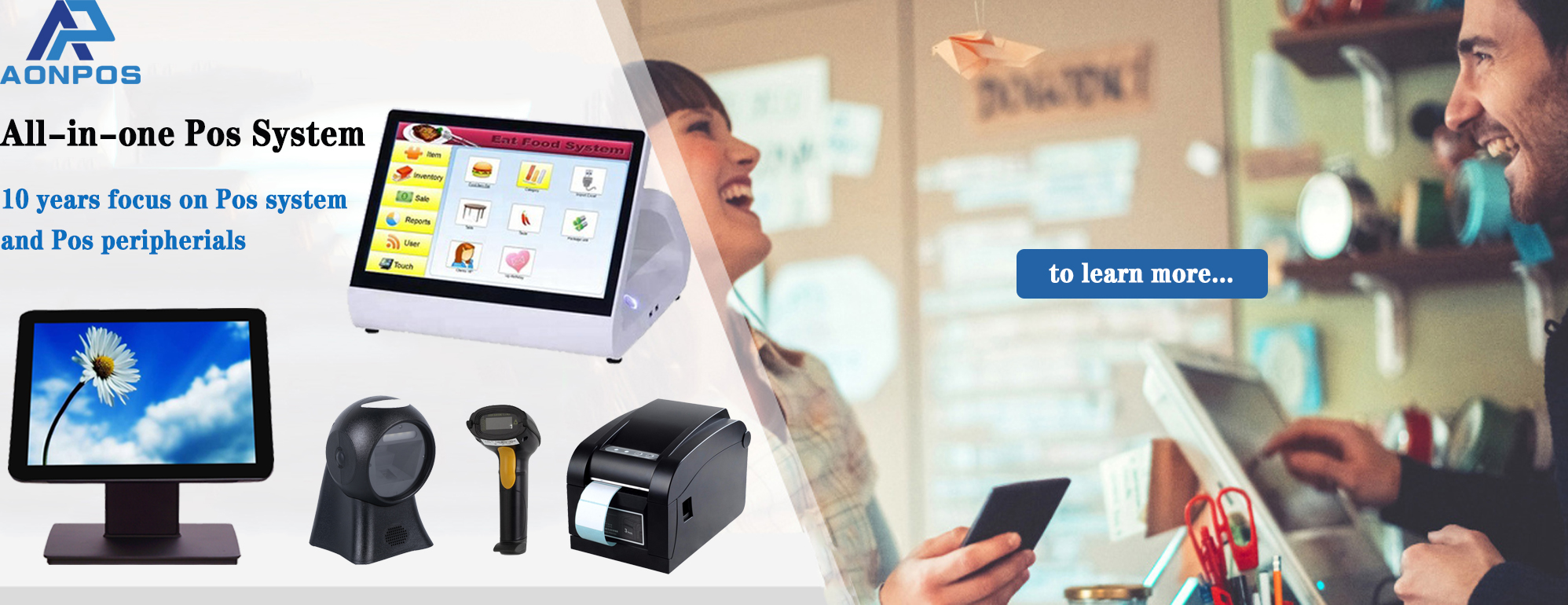
What is the Fundamental Difference Between a Self-Service Machine and a POS System?
Dec 08, 2025The distinction between a Point of Sale (POS) machine and a Self-Service Machine (often called a kiosk) centers on who is operating the device and its primary operational role within the business.
The POS System is the comprehensive, staff-operated central hub for sales, business management, and reporting. The Self-Service Machine is a customer-facing terminal designed specifically to streamline the ordering, scanning, and payment processes, reducing the need for direct staff involvement in every transaction.
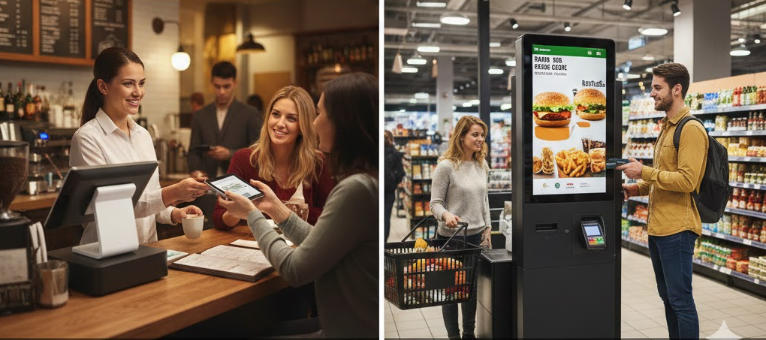
Achieving a high ranking requires defining the terms clearly for both Google and the reader.
A POS system is a combination of hardware and software used by a business to finalize transactions. Crucially, it serves as the central nervous system for the entire operation.
Primary User: Trained staff or cashier.
Role: Comprehensive financial management, order entry, employee clock-in/out, inventory tracking, and running detailed sales reports (e.g., daily sales, best-selling items, labor costs).
Location: Usually behind the counter, server station, or fixed service point.
A self-service machine or kiosk is a dedicated, public-facing terminal designed for quick, independent customer interaction.
Primary User: The customer.
Role: Facilitating fast order placement, product scanning, and payment completion, shifting the burden of data entry from the employee to the consumer.
Location: High-traffic customer areas like store entrances, dining halls, or waiting areas.
To cement the comparison, here is a detailed breakdown of how the two technologies differ in practice.
| Feature Category | POS Machine (Staff-Operated) | Self-Service Kiosk (Customer-Operated) |
| Operational Scope | Comprehensive. Manages refunds, complex discounts, loyalty programs, staff permissions, and back-office reports. | Transactional. Focuses purely on product selection, customization, and payment processing. |
| System Interface | Designed for staff efficiency, often featuring complex menus and detailed inputs for inventory management. | Designed for User Experience (UX), featuring large buttons, clear visuals, and intuitive guided workflows. |
| Hardware | Smaller touchscreen monitor, cash drawer, dedicated receipt printer, magnetic card reader, optional handheld scanner. | Large, durable, tamper-resistant touchscreen display, built-in payment terminal, dedicated stand/enclosure. |
| Connectivity | Deeply integrated with back-office software (inventory, labor, accounting). | Primarily integrated with the Kitchen Display System (KDS) or order fulfillment queue. |
| Cost | Lower initial hardware cost, but tied to comprehensive software licenses. | Higher initial hardware cost (due to size and durability) but potentially lower long-term labor costs. |
Deciding which system to invest in depends entirely on your business model and operational goals.
The POS machine is indispensable when transactions require human judgment and intervention.
Full-Service Restaurants: For managing complex table service, splitting checks, serving alcohol (age verification), and handling server tips.
Specialized Retail (e.g., Jewelry, Electronics): When sales involve extensive product knowledge, upselling guided by staff, or handling high-value security requirements.
Service-Based Businesses (e.g., Salons, Repair Shops): Used for booking appointments, managing client histories, and processing service-based invoices.
Kiosks are a powerful tool for streamlining high-volume, repetitive processes.
Quick-Service Restaurants (QSR) & Fast Casual: Reduces queues, allows customers to customize orders perfectly, and boosts average order value (AOV) through automated upsells.
Retail Groceries & Pharmacies: Provides a quick checkout option for customers with a few items (self-checkout).
Entertainment & Travel: Used for ticket purchasing, printing boarding passes, or checking into hotels.
Business Impact: A well-placed kiosk can significantly reduce labor costs and increase order accuracy, while the POS machine remains vital for inventory control and detailed financial auditing.
A successful modern business often requires both systems working in harmony.
To determine your priority, consider the following:
Do you require staff to manage inventory and labor? POS System is essential.
Is your business high-volume and order accuracy critical? Self-Service Kiosk is a high-value investment.
Do you want staff to focus on customer service instead of data entry? A combination is best. Use kiosks for ordering, and POS systems for exceptions (returns, large orders, staff overrides).
Tel / Whatsapp : +86 -15999943922
Correo electrónico : nikki@aonpostech.com


© 2026 Tecnología Co., Ltd de Shenzhen Aonpos .Reservados todos los derechos