Automatic Touch Screen Payment Terminal Kiosk: The Future of Smart Self-Service Payments for Modern Businesses
Mar 09, 2026In today’s digital economy, businesses across retail, transportation, healthcare, and hospitality are rapidly adopting automated self-service technologies to improve operational efficiency and customer experience. Among these innovations, the Automatic Touch Screen Payment Terminal Kiosk has emerged as a critical solution for companies seeking to streamline transactions, reduce labor costs, and deliver faster services.
For engineers, procurement managers, and enterprise decision-makers, choosing the right payment kiosk solution is not only a hardware decision but also a strategic investment in digital transformation.
This article explores the technology, applications, benefits, and key selection criteria of automatic touch screen payment kiosks and explains why they are becoming a core infrastructure component in modern commercial environments.
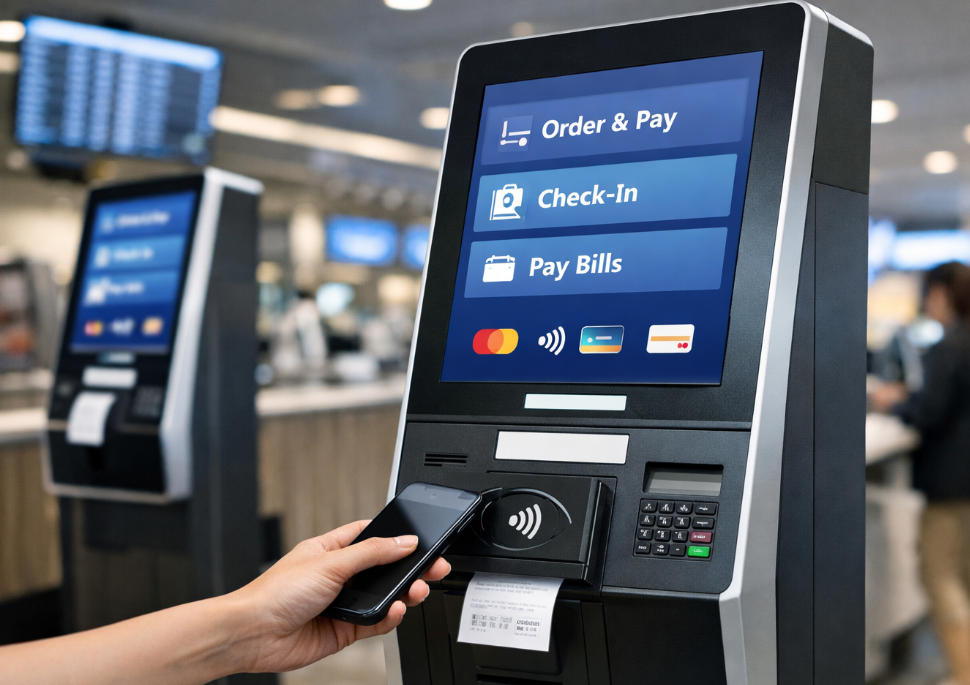
An Automatic Touch Screen Payment Terminal Kiosk is a self-service interactive device that allows users to complete transactions without staff assistance. These kiosks typically integrate:
Industrial-grade touchscreen displays
Secure payment modules (EMV, NFC, QR, contactless)
Receipt printers
Barcode or QR scanners
Cloud-based management systems
POS or ERP integration
Businesses deploy these kiosks to enable customers to place orders, pay bills, check in, or purchase services autonomously, improving transaction speed and reducing queues.
The global adoption of self-service payment kiosks is accelerating as companies invest in automation. Industry reports estimate that the self-service kiosk market will grow significantly through 2029, driven by demand for contactless payments and digital retail transformation.
One of the main reasons enterprises deploy touch screen payment kiosks is to reduce reliance on front-desk staff.
Self-service kiosks can handle hundreds of daily transactions automatically, allowing employees to focus on higher-value tasks such as customer service and operations management.
For large retail chains or transportation hubs, this can significantly reduce operational expenses while maintaining service quality.
Key benefits include:
Reduced staffing requirements
Faster transaction processing
Increased service capacity
Lower human error rate
Customer experience is directly linked to waiting time. Studies show that many businesses adopt kiosks primarily to reduce queue times and improve service flow.
With an automatic payment kiosk, multiple customers can complete transactions simultaneously, which is particularly valuable in high-traffic environments such as:
Airports
Quick-service restaurants
Hospitals
Retail stores
Government service centers
Modern kiosks support multiple payment methods, including:
NFC contactless cards
Mobile wallets (Apple Pay, Google Pay)
QR code payments
Chip & PIN (EMV)
Cash (optional modules)
The increasing demand for contactless payments and unattended transactions has significantly boosted kiosk adoption worldwide.
For enterprises, this ensures compatibility with global payment standards and future-proof transaction systems.
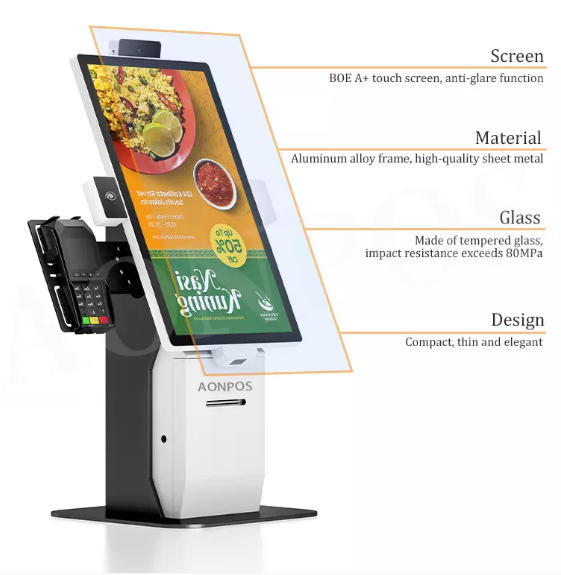
When engineers or procurement teams evaluate a touch screen payment terminal kiosk, several hardware and software capabilities are essential.
Commercial kiosks typically use 15–32 inch capacitive touch displays designed for continuous operation in public environments.
A professional kiosk supports multiple payment technologies:
EMV Level 1 & Level 2 certified card readers
NFC contactless modules
QR scanning payment
Secure encrypted PIN pads
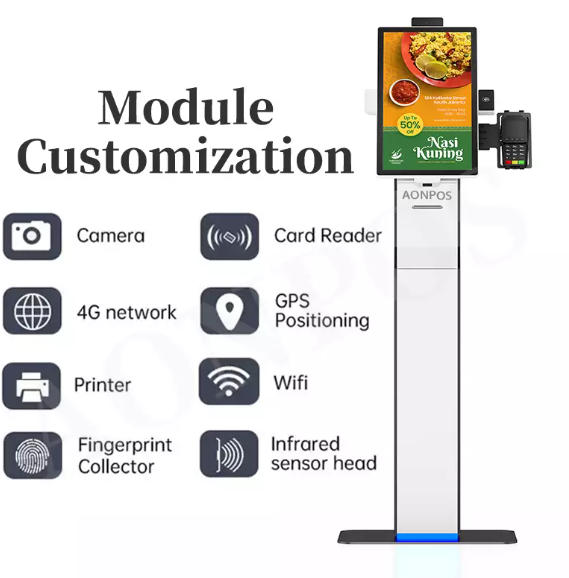
Advanced kiosks include IoT remote management platforms, allowing businesses to monitor device health, transactions, and maintenance remotely.
Depending on deployment scenarios, kiosks may include:
IP65 waterproof outdoor cabinets
Wide temperature operation
Anti-vandal steel enclosures
Outdoor kiosks are increasingly popular in parking, ticketing, and transportation systems due to their durability and 24/7 availability.
The self-service payment kiosk ecosystem now spans multiple industries.
Retailers use kiosks for:
Self-checkout
Product ordering
Loyalty membership services
Restaurants deploy kiosks to enable customers to:
Browse menus
Customize orders
Pay instantly
Hospitals use kiosks for:
Patient check-in
Appointment registration
Payment processing
Common uses include:
Ticket purchase
Parking payment terminals
Boarding check-in
Kiosks are also used in public service centers for:
bill payments
document applications
self-service administrative services
For enterprise buyers, selecting a reliable kiosk manufacturer is crucial.
Look for manufacturers with:
In-house industrial design
CNC metal fabrication
Electronics integration
Strict quality control systems
A professional payment terminal kiosk should comply with:
CE / FCC
PCI DSS
EMV certification
UL safety standards
These certifications ensure security, reliability, and global deployment capability.
B2B clients often require customization such as:
Screen size changes
Branding
Payment module integration
Software SDK support
A manufacturer capable of OEM and ODM kiosk solutions can help enterprises deploy tailored self-service systems.
The next generation of kiosks will integrate advanced technologies, including:
Artificial intelligence is being used to optimize user interaction and improve service efficiency.
Biometric authentication can enhance payment security and identity verification.
Kiosks are becoming core infrastructure for automated retail environments and cashier-less stores.
Real-time analytics helps enterprises understand customer behavior and optimize operations.
These technologies will further accelerate the adoption of self-service payment terminals in global markets.
For modern enterprises, automation is no longer optional—it is essential.
Deploying automatic touch screen payment terminal kiosks enables companies to:
Increase operational efficiency
Improve customer experience
Reduce staffing costs
Enable 24/7 service availability
Accelerate digital transformation
As industries move toward smart retail, digital healthcare, and automated transportation systems, self-service payment kiosks will continue to play a central role in business infrastructure worldwide.
Tel / Whatsapp : +86 -15999943922
Correo electrónico : nikki@aonpostech.com


© 2026 Tecnología Co., Ltd de Shenzhen Aonpos .Reservados todos los derechos