Self Service Payment Kiosks in Retail: How Smart Stores Are Reinventing the Checkout Experience
Mar 11, 2026Walk into almost any busy retail store today and you’ll likely notice something different near the checkout area. Traditional cashier lines are gradually being replaced—or at least supplemented—by sleek touch screen kiosks where customers scan items, tap their cards or phones, and complete transactions on their own.
This shift isn’t just a trend. It reflects a deeper transformation in how physical retail operates.
Customers have become accustomed to the speed and convenience of online shopping. One-click payments, mobile wallets, and instant order confirmations have changed expectations. When shoppers visit a physical store, they no longer want to wait in long lines or navigate slow checkout processes.
Retailers are responding by redesigning the checkout experience. Instead of relying solely on staffed registers, many stores are introducing self service payment kiosks that allow customers to complete purchases quickly and independently.
For businesses, this isn’t just about modernization. It’s about improving store efficiency, reducing operational bottlenecks, and creating a retail environment that aligns with today’s digital-first consumer behavior.
Retail experts often describe checkout as the “final impression” of the in-store shopping journey. Everything a customer experiences before reaching the register—product displays, store layout, customer service—can be overshadowed by a frustrating checkout experience.
Long queues remain one of the biggest pain points in physical retail. Even in well-managed stores, peak hours can quickly overwhelm traditional cashier counters.
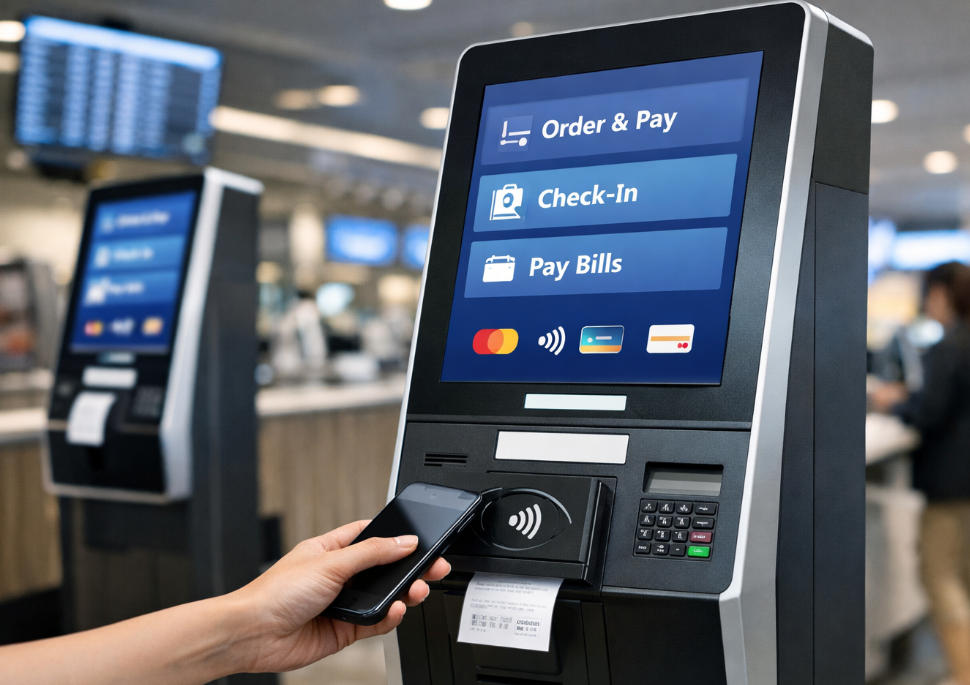
Self-service kiosks help address this problem by expanding checkout capacity without requiring additional floor space or staff. Instead of waiting for a cashier, customers can move directly to an available kiosk, scan their items, and complete payment in seconds.
For retailers, the impact can be significant:
Faster customer throughput
Reduced congestion during peak hours
Improved overall store flow
When implemented effectively, automated checkout solutions help eliminate one of the most common friction points in physical shopping.
Retail technology has evolved rapidly in the past decade. What once seemed experimental—digital shelves, automated inventory tracking, and AI-driven analytics—is now becoming standard in many modern stores.
Self service kiosks play an important role in this broader smart retail ecosystem.
Instead of functioning as isolated machines, modern kiosks are often integrated with a retailer’s entire digital infrastructure. This includes:
Point-of-sale systems
Inventory management software
loyalty programs
digital promotions
customer data analytics
Because of this integration, kiosks are not just checkout devices—they become data collection points that help retailers better understand shopping behavior.
For example, stores can track:
average checkout time
popular product combinations
peak shopping hours
payment preferences
This information allows retailers to make smarter operational decisions and refine the overall store experience.
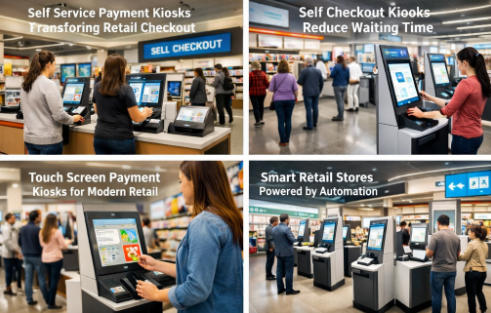
Retail competition today extends far beyond pricing and product selection. Convenience has become one of the most powerful differentiators between brands.
Customers expect shopping to be fast, intuitive, and flexible. That means providing multiple ways to complete a purchase.
Some shoppers prefer traditional cashier service. Others want a fast, self-directed experience. Smart retailers recognize that offering both options creates a better environment for everyone.
Self-service payment kiosks support this hybrid model.
Customers who want speed can complete their transactions quickly, while those who prefer assistance can still choose a staffed register. The result is a more balanced and efficient checkout area.
Retailers that prioritize convenience often see improvements in customer satisfaction and repeat visits.
Retail employees frequently juggle multiple responsibilities—restocking shelves, assisting customers, managing inventory, and operating checkout counters.
During busy periods, checkout duties alone can consume a large portion of staff time.
Automated kiosks help redistribute that workload.
Instead of focusing primarily on scanning items and processing payments, staff members can spend more time assisting customers on the sales floor. This shift improves the overall shopping experience while allowing stores to operate more efficiently.
In many cases, employees transition from transactional roles to more service-oriented ones. They help guide customers through the store, answer product questions, or assist with kiosk usage when needed.
The result is a retail environment that feels both technologically advanced and human-centered.
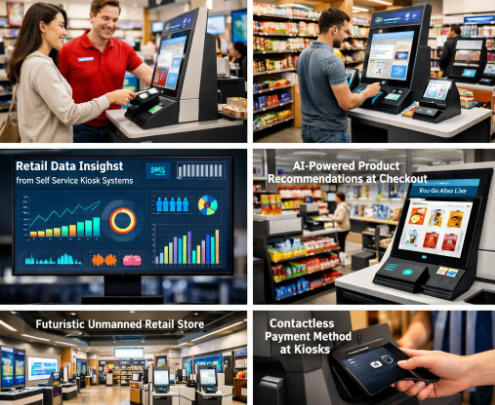
Another factor accelerating the adoption of automated checkout systems is the rapid growth of contactless payments.
Consumers are increasingly comfortable using:
mobile wallets
contactless credit cards
QR code payments
digital loyalty apps
Self-service kiosks are well suited to support these payment methods because they are designed around digital interfaces and integrated payment terminals.
For retailers, this means faster transactions and fewer cash-handling requirements. Digital payments also reduce the risk of errors and simplify financial reporting.
As payment technology continues to evolve, checkout kiosks will likely become even more flexible, supporting emerging methods such as biometric authentication or integrated mobile checkout.
Although self-service kiosks are now common in supermarkets, their adoption has expanded into many other retail environments.
Convenience stores benefit from kiosks because customers typically make quick purchases and expect fast checkout.
Electronics retailers use kiosks to reduce congestion when customers purchase accessories or small items.
Shopping malls often deploy kiosks to handle high volumes of transactions without expanding cashier areas.
Another rapidly growing use case is unmanned retail stores, where automated kiosks handle nearly all payment processes.
In each of these environments, the goal is the same: streamline the purchasing process while maintaining a smooth customer experience.
Interestingly, the presence of self-service kiosks can also influence how customers shop.
Research in retail environments has shown that when checkout lines move quickly, shoppers tend to spend more time browsing the store. When customers feel confident they can leave quickly, they are less concerned about time pressure.
Kiosks can also support subtle sales opportunities.
For example, during checkout, the interface may display:
complementary product suggestions
limited-time promotions
loyalty program reminders
Because customers are already engaged with the screen, these recommendations often receive more attention than traditional signage.
When implemented thoughtfully, kiosks can contribute to increased average order value without interrupting the shopping experience.
Not all self-service systems succeed. Poorly designed kiosks can frustrate customers and create confusion.
The most successful retail kiosks focus on simplicity.
Interfaces typically include:
clear visual instructions
large touch targets
minimal steps to complete a transaction
multilingual support
Hardware design also plays an important role. Screen height, scanner placement, and payment terminal accessibility must all be carefully considered to ensure usability for a wide range of customers.
Retailers that invest in user-friendly kiosk design often see higher adoption rates and smoother checkout flows.
One of the lesser-discussed advantages of self-service kiosks is the data they generate.
Each transaction processed through a kiosk provides valuable insights into customer behavior.
Retailers can analyze patterns such as:
which products are commonly purchased together
how long transactions take
when demand peaks throughout the day
which payment methods are most popular
This information helps stores optimize operations. For instance, managers can adjust staffing levels during busy hours or reposition popular products closer to checkout areas.
Over time, these insights contribute to more efficient store layouts and better merchandising strategies.
Looking ahead, automated checkout technology will likely continue evolving alongside broader retail innovation.
Several trends are shaping the next generation of smart retail environments.
Artificial intelligence is increasingly used to personalize promotions and product recommendations at checkout.
Computer vision technology is enabling cashier-less shopping systems where items are detected automatically.
Mobile integration allows customers to start transactions on their smartphones and complete them at kiosks.
While fully automated stores capture much of the attention in retail technology discussions, self-service kiosks remain one of the most practical and scalable solutions available today.
They offer a balance between automation and human interaction, allowing retailers to modernize operations without completely redesigning the store model.
Retail margins are often tight, and operational efficiency can make a significant difference in profitability.
By implementing automated checkout systems, retailers can:
process transactions faster
serve more customers during peak hours
reduce reliance on traditional cashier counters
gather valuable shopping data
At the same time, customers benefit from shorter lines and greater flexibility in how they complete purchases.
This alignment of operational efficiency and customer convenience explains why self service payment kiosks are becoming increasingly common across the retail landscape.
Physical retail is far from disappearing. In fact, many retailers are discovering that brick-and-mortar stores remain powerful spaces for product discovery and brand engagement.
However, the expectations surrounding in-store experiences have changed dramatically.
Customers want speed, flexibility, and digital convenience—even when shopping in person.
Self service payment kiosks represent one of the most effective ways for retailers to meet these expectations while improving store efficiency.
As retail technology continues to evolve, automated checkout systems will likely become a standard feature of modern stores, helping create shopping environments that are faster, smarter, and more customer-friendly.
Tel / Whatsapp : +86 -15999943922
Correo electrónico : nikki@aonpostech.com


© 2026 Tecnología Co., Ltd de Shenzhen Aonpos .Reservados todos los derechos